
Sensors we deploy for continuous infrastructure monitoring

infrascan deploys a focused set of engineering-grade sensors to measure how infrastructure actually behaves - not just how it looks.

We select sensors based on dominant failure mechanisms such as settlement, lateral movement, vibration, cracking, or environmental effects. All data streams are unified into a single monitoring layer with trends, thresholds, alerts, and engineering-ready reporting. Every sensor is selected to answer a specific engineering question.

What We Measure

infrascan focuses on physical and environmental parameters that indicate risk development - not just visible damage.

  • Displacement — absolute and relative movement over time
  • Inclination & rotation — tilt, differential settlement, loss of alignment
  • Crack opening — structural deformation and material separation
  • Vibration & dynamics — operational loads, fatigue, abnormal events
  • Environmental conditions — temperature and humidity effects
  • Air quality & gases — safety-critical airborne risks
  • Sensor Types We Use

    Each sensor family targets a specific failure mode and provides early, quantifiable signals long before critical damage occurs.

    ChatGPT Image Feb 4, 2026, 12_09_23 AM
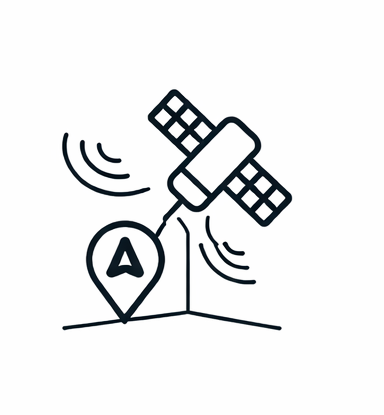
    GNSS Displacement Sensors

    Detect slow or progressive movement with millimeter-level accuracy in 3D.
    Typical use: buildings, slopes, retaining walls, pipeline corridors, industrial sites.
    Read More
    ChatGPT-Image-Feb-4-2026-12_09_23-AM.webp
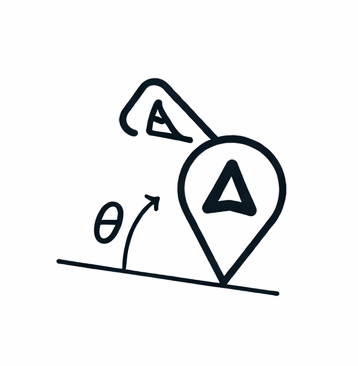
    Tilt & Inclination Sensors

    Measure rotation, loss of verticality, and differential settlement caused by structural or ground deformation.
    Typical use: columns, walls, foundations, towers, tanks, industrial frames.
    Read More
    ChatGPT Image Feb 4, 2026, 12_09_23 AM
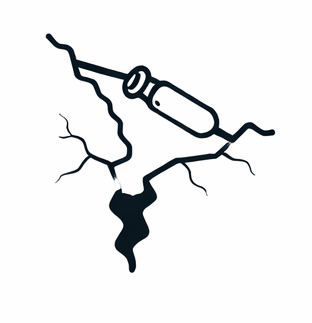
    Crack Monitoring Sensors

    Track crack opening and closing over time to distinguish active structural deformation from stable defects.
    Typical use: concrete and masonry buildings, retaining structures, industrial slabs and walls.
    Read More
    ChatGPT Image Feb 4, 2026, 12_09_23 AM
    Vibration Sensors

    Capture dynamic response, operational loads, fatigue effects, and abnormal vibration events.
    Typical use: industrial facilities, machinery foundations, bridges, hangars, slabs, pipelines.

    Read More
    ChatGPT-Image-Feb-4-2026-12_09_23-AM-2.webp
    Environmental Sensors

    Measure temperature and humidity to separate structural behavior from environmental influence and material effects.
    Typical use: buildings, warehouses, hangars, industrial sites.

    Read More
    ChatGPT Image Feb 4, 2026, 12_09_23 AM
    Gas & Air Quality Sensors

    Detect hazardous gases and airborne contaminants to identify safety risks and abnormal operational conditions.
    Typical use: industrial facilities, hangars, enclosed spaces, pipeline infrastructure, utility areas.

    Read More
    How We Select Sensors

    Sensor selection is driven by engineering logic — not by hardware availability.

  • Failure mechanism identification
    Settlement, slope creep, vibration fatigue, thermal deformation, cracking.
  • Measurable indicators definition
    Required accuracy, sampling rate, long-term stability.
  • Installation strategy
    Sensor placement, reference points, redundancy, environmental protection.
  • This approach ensures that every deployed sensor produces data that is actionable, interpretable, and relevant.

    From Sensors to Decisions

    All sensors are connected to a unified monitoring platform. Data is processed into clear engineering indicators instead of raw numbers.

  • Real-time trends and historical baselines
  • Threshold-based and anomaly-based alerts
  • Event detection and change-point analysis
  • Remote access for owners, engineers, and operators
  • The goal is not data collection — the goal is early decision-making.

    Sensor Connectivity Options

    All monitoring sensors can be supplied with different communication and connectivity options, depending on site conditions, power availability, and infrastructure requirements.

    The sensor type (tilt, crack, GNSS, vibration, environmental) remains the same — only the data transmission method changes.

    Below are the available connectivity technologies used to deliver sensor data to the monitoring platform, dashboards, and alerting systems.

    The appropriate option is selected based on distance, power constraints, network availability, and the criticality of the monitored asset.

    LoRaWAN Monitoring Sensors

    LoRaWAN monitoring sensors are designed for long-range, low-power data transmission in distributed infrastructure monitoring projects.

    Optimized for installations where power and connectivity are limited, these devices reliably send structural, geotechnical, and environmental measurements over several kilometers using a single gateway.

    Typical applications:

  • GNSS displacement monitoring
  • Tilt & inclination monitoring
  • Crack and settlement monitoring
  • Pipelines, slopes, and open-area assets
  • Key advantages:

  • Multi-year battery operation
  • No SIM cards required
  • Excellent range in open and semi-urban areas
  • Cellular Monitoring Sensors (NB-IoT / LTE-M)

    Cellular monitoring sensors use NB-IoT and LTE-M technologies to provide direct-to-cloud connectivity via mobile operator networks.

    These sensors are designed for locations where installing local gateways is impractical, but reliable cellular coverage is available, such as urban and semi-urban infrastructure.

    NB-IoT and LTE-M offer excellent signal penetration and stable communication, making them suitable for critical assets and underground installations.

    Typical applications:

  • Urban structural monitoring
  • Bridges, buildings, and retaining structures
  • Underground utilities and chambers
  • Critical infrastructure requiring guaranteed connectivity
  • Key advantages:

  • Direct internet connectivity without local gateways
  • High network availability via mobile operators
  • Good penetration through soil, concrete, and structures
  • Suitable for low-latency alarms and status reporting
  • Wired Monitoring Sensors (RS-485 / Modbus)

    Wired monitoring sensors provide reliable and interference-free data transmission using industrial communication protocols such as RS-485 and Modbus.

    These sensors are designed for permanent installations where power and cabling infrastructure are available, offering maximum stability and continuous data acquisition.

    Wired connectivity is often preferred for critical assets and environments with high electromagnetic interference or strict reliability requirements.

    Typical applications:

  • Industrial facilities and plants
  • Bridges, tunnels, and critical structures
  • High-frequency vibration and dynamic monitoring
  • Integration with SCADA and industrial control systems
  • Key advantages:

  • Stable, low-latency communication
  • No battery limitations
  • High data throughput and precision
  • Easy integration with existing industrial systems
  • Short-Range Wireless Sensors (Zigbee / BLE)

    Short-range wireless sensors use Zigbee and Bluetooth Low Energy (BLE) technologies for local, low-power communication between nearby devices.

    These sensors are typically deployed within buildings or compact industrial sites, where multiple devices form a local network connected to a central gateway.

    Zigbee mesh networking allows sensors to relay data through neighboring nodes, while BLE is often used for temporary measurements and local diagnostics.

    Typical applications:

  • Building monitoring and indoor environments
  • Equipment rooms and industrial halls
  • Temporary installations and surveys
  • Local commissioning and maintenance diagnostics
  • Key advantages:

  • Low power consumption
  • Simple deployment in compact areas
  • Mesh networking for redundancy (Zigbee)
  • Fast local access and configuration (BLE)
  • Sensors
    Get in touch

    Connect with Our Experts for Assistance Today

    We successfully cope with tasks of varying complexity, provide long-term guarantees and regularly master new technologies. Our portfolio includes do

    From Data to Decisions. We transform precise aerial, LiDAR, and IoT data into actionable insights - empowering businesses to make confident, evidence-based decisions. Through advanced analytics and AI-driven intelligence, we help organizations across infrastructure, real estate, and industrial sectors enhance safety, optimize performance, and unlock hidden value in their assets.

    © Copyright 2024 All rights reserved.

    infrascan.ai